Do peptides raise testosterone? What kisspeptin, GH peptides and TRT actually do

The short answer
Mostly no. The popular growth-hormone peptides (tesamorelin, sermorelin, CJC-1295, ipamorelin) raise growth hormone and IGF-1, not testosterone, and tesamorelin's label reports no meaningful change in LH. Kisspeptin is the exception: it raised LH and testosterone in small, short human studies, but it remains investigational. TRT is the only option here with guideline backing for diagnosed low testosterone.
Search “peptides for testosterone” and you will find a lot of confident answers. Clinics, forums and influencer videos list sermorelin, CJC-1295, ipamorelin and tesamorelin as ways to “boost T,” often in the same breath as TRT. This page checks that claim against the primary research. The short version: testosterone is controlled by one hormone chain and growth hormone by another, and almost every peptide in the conversation sits on the second chain. One peptide family, kisspeptin, really does reach the testosterone chain, but the human data on it is small and early.
Do peptides raise testosterone?
Most of the peptides sold for this purpose do not, according to the human data we could find. Testosterone in men is driven by luteinizing hormone (LH) from the pituitary, and the growth-hormone peptides act on a different pituitary signal. Tesamorelin’s label states that no clinically significant changes in LH were seen in its clinical trials (Egrifta WR label, DailyMed). The exception is kisspeptin, which sits upstream of LH and raised testosterone in small human studies (George et al., 2011).
Which peptides touch the testosterone axis at all?
Only a short list, led by kisspeptin, which triggers the release of gonadotropin-releasing hormone (GnRH) and so LH (George et al., 2011). A 2026 review of peptides in urology and sexual medicine, which screened 725 records and included 76 studies, describes the peptides it covered as working through different routes, including stimulation of the hypothalamic-pituitary-gonadal axis (the testosterone chain) and of the growth hormone axis (Vasylieva et al., 2026). The same review says kisspeptin “shows early promise but remains investigational,” and that gonadorelin was FDA-approved but is no longer manufactured. Everything else in the “testosterone peptides” lists (tesamorelin, sermorelin, CJC-1295, ipamorelin) is a growth-hormone drug.
| Peptide | Hormone chain it acts on | What it raises in human studies | Evidence level |
|---|---|---|---|
| Kisspeptin-10 | Testosterone chain (via GnRH and LH) | LH and testosterone, short term | Small, short human studies; investigational |
| Tesamorelin | Growth hormone chain | Growth hormone, IGF-1; no meaningful LH change | Approved drug for one labeled use; randomized trials |
| Sermorelin (GHRH 1-29) | Growth hormone chain | Growth hormone, IGF-1 in some studies | Pediatric approval (since withdrawn); small adult studies |
| CJC-1295 | Growth hormone chain | Growth hormone, IGF-1 | Small early-phase trials in healthy adults |
| Ipamorelin | Growth hormone chain | Growth hormone (shown in animal and cell studies cited here) | Mostly animal and cell studies |
How do people use peptides for testosterone, and why?
People reach for these peptides for three overlapping reasons: to avoid starting TRT, to add something on top of TRT, or to chase body-composition goals that get bundled with “testosterone” in marketing. Kisspeptin comes up in a narrower context: men on TRT or coming off it, asking whether it can keep their own hormone production running, often as a talking point next to hCG. If you are new to the wider category, our overview of peptides for men covers what each one is sold for.
Does kisspeptin raise testosterone?
Yes, in short, supervised human studies, though the numbers involved are very small. In healthy men, a 22.5-hour intravenous infusion of kisspeptin-10 raised LH from 5.4 to 20.8 IU/L and serum testosterone from 16.6 to 24.0 nmol/L, in a group of four (George et al., 2011). A follow-up in men with type 2 diabetes and low testosterone found an 11-hour infusion raised testosterone from 8.5 to 11.4 nmol/L, again in four men, and the authors called it a proof-of-concept study (George et al., 2013). These were hospital infusions measured over hours, not weeks of self-injection, and in the first study the highest bolus dose produced a smaller LH response than a lower one. Our hub’s kisspeptin-10 overview covers the rest of its research, including fertility and libido.
Does tesamorelin increase testosterone?
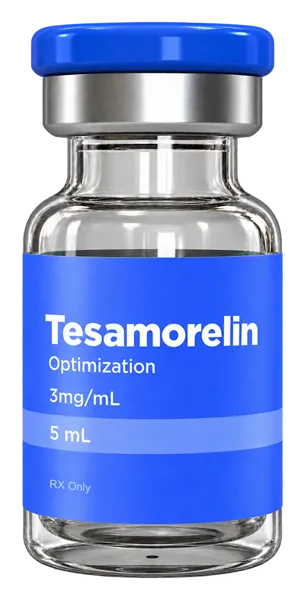
We found no evidence that it does. Tesamorelin is a synthetic analog of growth hormone-releasing factor; per its label it stimulates growth hormone secretion and raises IGF-1, and “no clinically significant changes” were observed in LH, thyroid-stimulating hormone, ACTH or prolactin in its trials (Egrifta WR label, DailyMed). Its only labeled use is reducing excess abdominal fat in adults with HIV-associated lipodystrophy, and the label says it is not indicated for weight loss. That makes it a growth-hormone-axis drug, not a testosterone therapy, which is worth keeping in mind when it appears on “testosterone peptide” lists.
Does CJC-1295 / ipamorelin affect testosterone?
No human study we found measured a testosterone rise from either one. In two placebo-controlled trials in healthy adults aged 21 to 61, a single CJC-1295 injection raised growth hormone 2- to 10-fold for six days or more and IGF-1 1.5- to 3-fold, and those were the main outcomes the trials measured (Teichman et al., 2006). Ipamorelin was described by its developers as the first selective growth hormone secretagogue, and in swine none of the secretagogues tested changed FSH or LH levels (Raun et al., 1998). That is animal data, but it points the same way as tesamorelin’s label: these compounds work on growth hormone, not on the signal that drives testosterone.
What does the evidence show overall?
The evidence splits cleanly by hormone chain. For the testosterone chain, kisspeptin has small, short human studies showing LH and testosterone rises over hours, and the 2026 review still describes it as investigational (George et al., 2011; Vasylieva et al., 2026). For the growth hormone chain, the 2026 review found the secretagogues “reliably increase growth hormone and insulin-like growth factor 1 concentrations,” but evidence for improved sexual function, physical performance or quality of life “remains limited” (Vasylieva et al., 2026). TRT, by contrast, has large randomized trials: in the Testosterone Trials, 790 men aged 65 or older with low testosterone and symptoms were given testosterone gel or placebo for a year, and treatment raised levels to the mid-normal range and moderately improved sexual function, with some benefit to mood but none for vitality or walking distance (Snyder et al., 2016). PeptideAgent’s review of peptides for low testosterone also treats kisspeptin as experimental, and notes that the peptide hormones with an established role, hCG and gonadorelin, matter mainly when fertility is the goal.
Peptides vs TRT: how do they compare?
TRT replaces testosterone directly; kisspeptin tries to prompt the body to make more of its own; the growth-hormone peptides do not target testosterone at all. The table puts those differences side by side.
| Attribute | TRT | Kisspeptin | GH peptides (tesamorelin, sermorelin, CJC-1295, ipamorelin) |
|---|---|---|---|
| What it acts on | Supplies testosterone directly | Stimulates GnRH, then LH, then the body’s own testosterone | Stimulates growth hormone release; IGF-1 rises |
| Effect on testosterone | Raises it to the target range by design | Raised it over hours in small infusion studies | No rise shown; tesamorelin label reports no meaningful LH change |
| Evidence level | Large randomized trials; clinical guidelines | Small, short human studies; investigational | Randomized trials for tesamorelin’s labeled use; small or early studies for the rest |
| Effect on fertility | Guideline says not to prescribe to men trying to conceive | Investigational; not among the guideline’s fertility options | Not covered by the studies cited here |
| Who it is for | Men with symptoms and confirmed low testosterone | Research settings | Tesamorelin: adults with HIV-related abdominal fat; others vary |
The fertility row is where kisspeptin draws attention. The American Urological Association says exogenous testosterone “should not be prescribed to men who are currently trying to conceive,” and lists aromatase inhibitors, hCG and selective estrogen receptor modulators as options for men with low testosterone who want to maintain fertility, with kisspeptin not among them (AUA guideline). Our page on TRT and fertility, hCG and enclomiphene covers those options.
TRT and GH peptides: sermorelin vs TRT, TRT and HGH
Sermorelin vs TRT is a comparison of two different hormone chains, not two routes to the same result. Sermorelin is GHRH(1-29), the first 29 amino acids of growth hormone-releasing hormone, studied as a nightly injection in growth-hormone-deficient children (Thorner et al., 1996); the Geref brand was later withdrawn, and FDA determined it was not withdrawn for reasons of safety or effectiveness (Federal Register, 2013). In 11 healthy older men, six weeks of nightly GHRH(1-29) raised nighttime growth hormone release but did not change IGF-1, weight or scan-measured muscle and fat (Vittone et al., 1997). A modified GHRH(1-29) analog given for 16 weeks to 9 men and 10 women aged 55 to 71 raised IGF-1 and, in men only, lean body mass and self-reported libido; the abstract does not report testosterone (Khorram et al., 1997). For how sermorelin stacks up against the better-studied GHRH drug, see Recomp Lab’s tesamorelin vs sermorelin.
The closest thing to a “TRT and HGH” trial is growth hormone itself combined with testosterone. In a six-month randomized trial of 80 healthy men aged 65 to 80, lean body mass rose with growth hormone alone and with growth hormone plus testosterone, while total body fat fell and thigh muscle and aerobic capacity rose only in the combined group; muscle strength results were mixed, and growth hormone alone increased bodily pain scores (Giannoulis et al., 2006). That trial used low-dose recombinant growth hormone, not peptides, with a fixed-dose testosterone patch, so it does not tell you what a peptide added to TRT would do. Recomp Lab covers that question for lifters in peptides while on TRT.
What side effects come with these peptides?
Each group has its own profile, and the long-term data is thin across the board. Tesamorelin’s label warns of fluid retention (swelling, joint pain, carpal tunnel syndrome), glucose intolerance, hypersensitivity reactions and raised IGF-1, and reports that HbA1c of 6.5% or higher was seen in 5% of people on the drug versus 1% on placebo by week 26 (Egrifta WR label, DailyMed). It is contraindicated in pregnancy, active cancer and disrupted hypothalamic-pituitary function, and the label says its long-term cardiovascular safety has not been established. The 2026 review notes that CJC-1295 and related agents circulate through unregulated markets, raising concerns about product quality, dosing variability and incompletely characterized adverse effects, and that safety data across peptide classes are limited by short follow-up and small samples (Vasylieva et al., 2026). TRT has known monitoring needs of its own, which our guide to blood tests before starting TRT covers.
Are peptides steroids, or a safer TRT?
No to both: peptides are a different chemical class from steroids, and none of the growth-hormone peptides replaces what TRT does. “Peptides vs TRT” is often framed as a gentler alternative, but the evidence above shows they mostly target a different hormone altogether. Our explainer on whether peptides are steroids walks through the chemistry and the “legal steroids” claim.
How do the costs compare?
The costs are not directly comparable, because each buys a different thing. Monitored TRT bundles the medication with visits and repeat lab work; our TRT cost breakdown explains what goes into that figure. Tesamorelin is a prescription growth-hormone-axis drug, so buying it for testosterone means paying for an effect it has not been shown to have. Kisspeptin has no approved product and no reliable price to compare.
What is the community saying?
The talk is heavier on theory than on results. In the network’s Community Insights data on kisspeptin-10, built from 9 public posts on X between July 10 and 15, 2026, one poster floats the idea of combining kisspeptin with androgens to counter hormonal suppression, framed as an untested hypothetical that drew little engagement; no poster describes personal fertility results (community page). Reddit threads collected for the same page carry titles such as “Kisspeptin-10 as a replacement for HCG” on r/Testosterone, which matches the use case this page describes. On the growth-hormone side, the ipamorelin dataset (16 posts on X, July 15 to 16, 2026) shows users describing secretagogues as nudging the body’s own growth hormone pulses rather than replacing the hormone, and the CJC-1295 dataset (17 posts on X, July 13 to 19, 2026) shows commenters comparing CJC-1295 with tesamorelin on cost and tolerability. Neither dataset frames these peptides as testosterone drugs, which lines up with the research.
Status: Tesamorelin: FDA-approved only as Egrifta, for HIV-related abdominal fat; other uses are off-label. What these status terms mean.
The bottom line
If the goal is testosterone, the popular peptides are aimed at the wrong hormone. Tesamorelin, sermorelin, CJC-1295 and ipamorelin raise growth hormone and IGF-1, and tesamorelin’s label reports no meaningful effect on LH. Kisspeptin is the one peptide with human data showing testosterone rising, but that data comes from a handful of men over hours, and it remains investigational. TRT is the option with large trials and guidelines behind it for diagnosed low testosterone, with its own trade-offs, fertility above all. If you are still working out whether low testosterone is the issue, start with our guide to low testosterone symptoms.
Sources (13)
Advertising disclosure: links marked "Paid link" go to Bodybuilding Peptides (trybbpeptides.com), an affiliate destination, and TRT Clarity may earn a commission if you buy there. Our coverage is independent of that relationship, and nothing on this page is medical or legal advice.
 See it at Bodybuilding Peptides